Showing posts with label Cats. Show all posts

Thursday, September 26, 2013

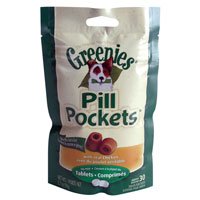
Today"s Kool Idea: Greenies Pill Pockets for Dogs and Cats

When we were kids, our older brother hated taking aspirin. Okay, perhaps we’re really showing our age here, but these were the days before children’s Tylenol liquid suspension and when Dimetapp cough syrup (we remember it as the yummy grape medicine) was by prescription only. Our poor mother could only get our brother to take a pill by crushing it in applesauce and spoon-feeding him. Considering the torture he put us through growing up, it was a great pleasure to have a reason to call big brother a “baby” at times…na nanny boo boo!

Our poor pets don’t have it as easy as our brother did when it comes to taking medication. Whenever our dog Pepper has to take a pill, we literally pry his mouth open, shove it to the back of his throat, clamp his jaw shut and rub until he swallows. Don’t get us wrong, Pepper’s pretty good about taking them (certainly better than our brother was), but why should we have to struggle at all? Isn’t there a way to let him think his medication is more reward than punishment?


Leave it to our mother…she found these Pill Pockets for dogs and cats by the Greenies company last year. As a foster parent for Poodle Rescue, our mother fell in love with and decided to keep an otherwise unadoptable dog who had a host of social and medical issues…sometimes, things are just meant to be. Poor Kasha took pills three times a day and somehow became very adept at hiding them in her mouth to later be spit out in Mom’s potted plants…ah yes, Kasha was quite the clever pooch. Greenies Pill Pockets changed all of that.


Greenies Pill Pockets for dogs and cats are a nutritious treat that contain a built-in pocket, perfect for hiding a pill or supplement. This veterinarian designed and recommended solution is truly brilliant (why can’t we think of these things?)! Seriously, folks…it doesn’t get any easier than this. Just hold the Greenies Pill Pocket, insert the pill, squeeze the top half closed, then give as a treat. There are two sizes available for dogs; the smaller one is great for tablets, while the larger one is more suited for capsules. The one size for cats works well for either capsules or tablets. Dogs have their flavor choice of beef or chicken, while cats get either chicken or salmon. Pets love the taste so much, they won’t even notice there’s medicine inside.

Though we have been recommending


Greenies Pill Pockets to all of our friends without complaint, remember that pets (like people) have different tastes…it is possible that yours won’t like them. But, for around $ 8 per package, it’s certainly worth taking the chance. We’ve also heard that some cats may be too smart to fall for the old “hide the pill in the pocket” trick and will chew around the pill…show offs! Our pooch Pepper tends to just swallow the whole darn thing, especially if we make him work (sit, shake, speak, etc.) to earn it. We love how pliable Greenies Pill Pockets for dogs and cats are…you can mush them around even really large pills. Plus, we can fit several smaller pills inside one of the larger pill pockets if we wanted to.

There has been some controversy surrounding the authenticity of some of the


Greenies Pill Pocket distributors on Amazon, so we’ve referred you to our friends at 1-800-PetMeds (we used to work for the CEO at his previous company ten years ago and are big fans of his). Besides, the prices are reasonable and they have a 100% customer satisfaction guarantee. The company doesn’t seem to carry the salmon flavor for cat, though…we’re not sure why. If you’d rather shop locally, we’ve found that Pet Supermarket tends to have a better price than PetSmart, and that many vets carry them as well.

Here’s the bottom line…if you put medication inside something that pets actually like, then giving pills becomes a lot easier. Just like the applesauce trick worked with our brother.


Greenies Pill Pockets for dogs and cats are a stress-free medication delivery treat and an absolute “kool” idea that every pet owner should try.


Bookmark and Share


Subscribe to The Daily Kool by Email


Monday, September 23, 2013

Cats are not small dogs and dogs are not small humans

Cats are not small dogs and dogs are not small humans


A LONG time ago, the first week of vet school, I received some very good advice from a wonderful professor. I was told that if I could remember that cats are not small dogs and dogs are not small humans, I’d keep myself, and my patients, out of a lot of trouble. My colleagues understand what I’m saying but I’ll explain the significance of that wonderful nugget of information to you folks reading this blog. You can’t treat cats like dogs and you can’t treat cats and dogs like humans. You see, if you understood this, you would not kill your cat by giving it Tylenol or your dog Ibuprophen. We just love to hear how you used some of “Your” medicine to treat your pet…and now we have to try to fix the mess you created. So please, DON”T SELF MEDICATE YOUR PET – they’re not small humans. ALWAYS call a vet before giving any medications – most towns/cities have 24 hour care so there is a vet you can reach by phone – that phone call may just save your pets life.

Dogs, Cats, Osteosarcoma, Dysplasia and Pet Food Fluoride


Dogs, Cats, Osteosarcoma, Dysplasia and Pet Food Fluoride


by George Glasser, NPWA Bulletin


The recent cover-up scandal about osteosarcoma and drinking water fluoridation brought to mind research I had done several years ago into canine osteosarcoma which is fairly common among certain breeds of dogs and cats.


Because of the association between osteosarcoma and drinking water fluoridation, I contacted people whose dogs developed the cancer to see if they lived in fluoridated areas, but there was not even a credible anecdotal connection. It appeared to be a universal problem. I dropped the investigation until the new flap came up about fluoride and osteosarcoma and I decided to take a fresh look at the issue again.


Osteosarcoma is the most common bone cancer in humans, cats and dogs. Osteosarcoma mostly occurs in male humans, dogs and cats. In dogs, the disease is more frequently seen in larger breeds such as rottweilers, greyhounds, golden retrievers, etc. Recent studies have also shown that osteosarcoma is also more common in taller people.


Osteosarcoma accounts for 85% of all primary bone tumours in dogs, and in the US – 8,000-10,000 dogs per year in U.S develop osteosarcoma.


In cats, osteosarcoma accounts for 70% of primary bone tumours.


In humans, about 5 children out of a million develop osteosarcoma each year. Osteosarcoma accounts for five percent of all primary bone tumors in children.


Osteosarcoma is the most common type of bone cancer/tumors seen in humans, dogs and cats.


CONNECTING THE DOTS:
If fluoride were possibly a factor – how did the animals get a sufficient dose in their diet? My research suggested that it was arbitrary and not associated with drinking water fluoridation, if fluoride were a factor. The only other possibility was in their food.


It took nothing more than an Internet search using “fluoride content + dog food” and there it was:


A low-fluoride commercial dog food contains 40 – 60 parts per million of fluoride. A high-fluoride dog food can contain up to 460 parts per million of fluoride (Marks TA, J Toxicol Environ Health. 1984;14(5-6):707-14).


“A 1971 study at the University of Montana found the average level of fluoride in leading pet foods to be 11 to 193 ppm, with the highest found in canned pet food. If your dog weighs 100 pounds this translates to a daily consumption of 21 to 368 milligrams of fluoride from commercial food.


The government upper daily limit of 2.5 milligrams of fluoride is said to be safe for children over three years of age. The Montana researchers found that fluoride accumulates in pet’s bones. 84 to 1535 milligrams of fluoride was found in dog’s leg bones. 74 to 1,190 milligrams was found in the bones of cats, and it increased with age.” http://www.leaflady.org/pethealth.htm.


Investigating further, some lower grade dog foods may contain even more – up to 2,000 parts per million of fluoride.


Interestingly, the only study I could find about dogs, osteosarcoma and fluoride was one where they were investigating fluoridated drinking water – Apparently, the researchers, not realising that dogs may already be consuming several hundred milligrams of fluoride per day in their food; tens – hundreds of times more that the recommended dose for humans of 1.0 milligram per day.


While there are fairly strict regulations about how much fluoride can be in the food of farm animals, the guidelines for pet foods are fluid. I could find no research for “safe fluoride levels” for cats and dogs.


There is no fluoride intake criteria for pet dogs and cats – it is all based on ASSUMPTION and not science.


The reason that pets and dietary fluoride intake have been totally neglected is that pets do not represent an agricultural cash commodity.


For instance, daily fluoride intake for breeding farm animals and dairy cows are lower than for animals raised for slaughter. The reason for this is high levels of fluoride can interfere with reproduction, milk production and the general health of the breeding stock/dairy cows.


“Safe levels of fluoride in the diet dry matter for finishing [slaughter] cattle are no more than 100 ppm (0.01 percent) and to more than 40 ppm (0.004 percent) for animals to be kept in the breeding herd.” http://muextension.missouri.edu/explore/agguides/ansci/g02081.htm


“Tolerance levels have been identified for domesticated animals, with the lowest values for dairy cattle at 30 mg/kg feed or 2.5 mg/litre drinking-water. . . Symptoms of fluoride toxicity include emaciation, stiffness of joints and abnormal teeth and bones. Other effects include lowered milk production and detrimental effects on the reproductive capacity of animals.” http://www.inchem.org/documents/ehc/ehc/ehc227.htm


It seems that pets fall into the lower end of the ‘safe limit’ priorities along with farm animals bred for slaughter – all regulations for levels of undesirable constituents of mineral supplements were developed with commercial agricultural ends in mind – profitability and cost saving for the farmer or rancher.


Unfortunately, pets are not considered an agricultural commodity and the agricultural standards are simply accepted without reservation by veterinarians for all animals. They do not factor in the fact that pets are pets and their owners are fond of them, and people want to keep them alive and healthy for as long as possible. People’s pets are not just nameless cash producing commodities that either go to slaughter or are put-down when they no longer can produce milk or offspring.


While, volumes of research has been done on pigs, sheep goats, chickens and cattle with regard to adverse health effects from fluoride, there is very little information about pets such as dogs and cats. Consequently, it is safe to assume that many of dogs and cats who appear to be suffering with arthritis, dysplasia, spinal deformities, etc. may have actually developed skeletal fluorosis. The veterinarians don’t have a clue that fluorosis might be the problem.


It appears that most veterinarians are completely unaware of the fact that there are cat and dog foods contain high fluoride levels and the physical problems that it can cause your pet dog or cat.


Researchers are looking at many of the health problems as genetic aberrations rather than toxicant related conditions such as skeletal fluorosis from high levels of fluoride contained in pet foods. While a particular breed may be genetically predisposed to those health problems, the contaminants in the feed may prematurely trigger the events or even make them more pronounced at a young age.


The addition of mineral supplements which contain high levels of fluoride is not a conspiracy, but plain old ignorance – your pet is simply in the same category as a farm animal bred for slaughter – no one has ever adequately investigated the long-term effects of fluoride intake on domestic pets or its impact on specific breeds.


While they have known that certain breeds are genetically predisposed to hip dysplasia (osteoarthritis), osteosarcoma, kidney dysfunction, etc., no one has done research to determine if the high levels of fluoride in their feed may exacerbate or even be the catalyst in triggering these adverse events.


Hip dysplasia is actually a form of arthritis of the hip bones. Most of the dogs and cats that are genetically predisposed to dysplasia develop the condition before they are two years old. However, dysplasia may well be misdiagnosed and is actually skeletal fluorosis – but veterinarians have not looked at this possibility because they haven’t thought outside of the agricultural nutrition box.


The primary source of the fluoride in pet foods is from the added mineral supplements: defluorinated phosphate rock (which still retains some fluoride and is found in more expensive pet foods), raw soft phosphate rock, mono and tricalcium phosphate (made from a mixture of phosphoric acid and calcium carbonate). The less expensive the dog food, probably, the higher the fluoride levels because they use raw phosphate.


Raw phosphate, mainly because of it’s fluoride content (3% -4%) is most physically damaging animal mineral supplement because it is not processed and the least expensive. These facts have been known since the 1920s in early animal nutritional research of fluorine in animal nutrition.


Manufacturers are not required to list the fluoride of contaminant levels in pet food.


Could it be, that by simply changing the mineral supplements added to dog and cat foods, many of the maladies your pet may suffer from can be virtually eliminated or delayed until much later in life.


Visit this site http://www.dogpack.com/health/healthproblems.htm and do some of your own research by entering “fluoride” or “fluorine*” with the problem into an internet search.


From my research, I would suggest purchasing meat from the butcher, and if the animal needs mineral supplements – give them the same quality supplement that you would take yourself.


Also see: http://www.npwa.freeserve.co.uk/pollution.htm for more information about phosphate rock.


* In animal nutrition, ‘fluoride’ is more commonly referred to as ‘fluorine’.


SOURCE: http://www.manataka.org/page1854.html


By George Glasser, Press Officer/Water Quality Advisor
National Pure Water Association
http://www.npwa.freeserve.co.uk/fluoride.html


Saturday, September 21, 2013

Aspirin and Cats


 Aspirin is never wise for cats because the amount needed consistently to control pain will cause serious gut and kidney problems. Instead, use disease modifying agents, such as acupuncture. Here, Kasia has an acupuncture needle in her head at GV 20, all yang meeting, to promote calm.

Human pain relievers are toxic to dogs and cats

This past week we saw a couple cases of ibuprofen toxicity in dogs- one was an intentional dosing of the dog by the owner, and the other was a case of the dog finding the bottle of pills and ingesting them. While these are two very different situations, the end result is the same: two very sick animals. Cats and dogs that ingest ibuprofen (the active ingredient in Advil), acetaminophen (Tylenol) or aspirin experience a wide range of negative effects such as severe vomiting, gastric ulcers, kidney failure, liver failure and, if the animal is not treated medically, death.


The dog we treated that accidentally ingested the ibuprofen pills arrived at CUVS comatose, with constricted pupils. She was unresponsive but trembling. Our team sprang into action by administering fluids and the appropriate drugs, placing a nasogastric tube, suctioning her stomach and giving her charcoal and gastroprotectants. Her blood values were closely monitored overnight and by the morning she was awake and aware, although she did stay in the intensive care unit for three more days. Despite the severity of this case, both dog and owner are very lucky: the attentive owner figured out something was wrong and rushed his dog to the vet. This quick thinking saved the dog’s life.


The case described above provides two valuable lessons for pet owners:

#1: Make absolutely sure that all of your pills at home are locked away securely.

#2: Do not give any pills to your dog or cat without seeing your vet first.


We all know that dogs like to jump up and see what’s on the counter or table, and cats have a truly remarkable ability to jump onto the highest shelves. A bottle of pills left out on a flat surface is a tempting target for both dogs and cats.


If you feel like your pet is in pain, always bring her in to see your vet. The vet will advise you on the proper care for whatever is causing the pain, and you can be certain that the prescription he writes for you will be safe.


Here is the rule of thumb we’d like you remember: dogs and cats cannot take the same pain relieving pills as humans.

Wednesday, September 18, 2013

Safety of OTC Pain Relievers & Antiinflammatories for Dogs and Cats

One of the most common questions we are asked is regarding the safety of Nonsteroidal Anti-inflammatory Drugs (NSAID’s) for dogs or cats. Inflammatory conditions like arthritis can cause a lot of pain for pets and desperate pet parents are often tempted to reach into their own medicine cabinet for relief, but are they safe to give to a dog or cat? Are there natural alternatives?


Part of the confusion comes from the fact that all of these over the counter anti-inflammatory pain relievers are different, even though they treat the same condition in a similar fashion. Confusion also stems from Veterinary recommendations for temporary use, leading pet guardians to mistakenly assume NSAID’s can be used as casually as they are in humans. Anti-inflammatory medication should never be given to any animal without consultation with a veterinarian to determine dosage, drug interaction, and complications with existing medical conditions or pregnancy.


Following are several common Nonsteroidal Anti-inflammatory Drugs that may be prescribed for your dog or cat, along with their associated dangers and side effects. Since we do not believe they should be administered without the guidance of a veterinarian, we will not provide a recommended dosage. Cats are highly sensitive to all NSAID’s described here due to their limited glucuronyl-conjugating capacity. Ferrets are also far more sensitive to Nonsteroidal Anti-inflammatory Drugs than dogs. Both may suffer the symptoms of toxicosis even at half the recommended dosage for dogs.


It’s important to note that not all veterinarians agree that animals should be given these medications at all.  In an article on WPRI.com, Dr. Tina Wismer says, ““It only takes one extra strength naproxen to kill a shithzu type dog. Ibuprofen can cause stomach ulcers and kidney failure in dogs and cats and acetaminophen can actually cause the blood to change so it can’t carry oxygen and cause liver failure.”


Can dogs or cats have asprin, motrin, advil anti-inflammatory NSAID?Acetylsalicylic acid (ASA) may be sold under the brand of Aspirin or generics, and can be taken internally or applied topically. Most dogs tolerate Aspirin well in low doses from a toxicosis point of view. However, they are more sensitive to gastric irritation and may begin to suffer damage in as little as two days of use. Cats are much more sensitive to Aspirin than dogs, primarily due to glucuronyl transferase deficiency and the length of time it takes them to excrete the medication.


Ibuprofen (iso-butyl-propanoic-phenolic acid) may be sold under the brands Advil, Motrin, Nuprin, Medipren, etc. It is sometimes used for dogs but it has a narrow margin of safety. Gastric irritation may occur, including perforation and ulceration. Cats are susceptible to ibuprofen toxicosis due to a limited glucuronyl-conjugating capacity.


Naproxen (derivative of propionic acid) may be sold as Aleve, Naprosyn, Anaprox, Naprelan, etc. It is similar to Ibuprofen and may be prescribed to dogs with acute arthritis pain. Cats are highly sensitive to Naproxen due to glucuronyl transferase deficiency.


Acetaminophen (nonopiate p-aminophenol derivative) may be sold as Tylenol or as generic acetaminophen. It’s often added to other drugs for the treatment of pain and inflammation. Acetaminophen causes less gastric irritation and damage than other NSAID’s. Liver damage may occur with excess or long term use, especially in dogs (Liver Necrosis). Cats are more susceptible to acetaminophen toxicosis than dogs due to glucuronyl transferase deficiency.


Natural Anti-inflammatories for Pets


There are many anti-inflammatory foods and herbs that can be easily incorporated into your pet’s diet to reduce or prevent inflammation. Make your own homemade pet treats and pet food, or some fresh foods may be accepted alone. Freshly dehydrated foods & herbs can easily be mixed into wet food (we get many of our fresh dried herbs from Starwest Botanicals).


Not all of the foods listed below are appropriate for all species (such as cats), but dogs will tolerate and digest them well if they aren’t allergic. Remove any pits before feeding.


Sardines (Omega 3)
Anchovies (Omega 3)
Salmon (Omega 3)
Striped Bass (Omega 3)
Freeze-dried Krill (Omega 3, Astaxanthin carotenoid)
Organic pasteurized eggs (Fatty acids, Choline)
Extra-virgin olive oil (Omega 3 & compounds that inhibit the production of the inflammatory chemicals, much like NSAID’s)
Peppers (Antioxidants, carotenoids, Vitamin C, capsaicin)
Dark leafy greens (Antioxidants, carotenoids, Vitamin C)
Seaweed (Eicosapentanoic acid, folate, Vitamin C & K)
Turmeric (bioflavonoids and polyphenols)
Rosemary (bioflavonoids and polyphenols)
Ginger (bioflavonoids and polyphenols)
Green tea (bioflavonoids and polyphenols)
Blueberries (flavonoids, carotenoids, Vitamin C)
Blackberries (flavonoids, carotenoids, Vitamin C)
Mango (Antioxidants, beta-carotene, Vitamin C & E)
Apples (Boron)
Whole grains such as oatmeal, brown rice, and barley (Lowers levels of C-reactive protein (CRP), an inflammation marker)
Alkaline Water (soft acidic water can be countered with the addition of a dash of Calcium Montmorillonite Clay in the water dish)


Blog Comment - Anti-inflammatory NSAID Dogs & CatsDoes your pet suffer from an inflammatory condition? Please share your experiences in the comments below.


Sources:
Manufacturer’s PIL, Naprosyn 250mg and 500mg Tablets, Roche Products Limited, electronic Medicines Compendium. 2009.
Kahn, Cynthia. The Merck Veterinary ManualThe Merck Veterinary Manual. 2010.
Davis, Lisa M. Anti-Inflammatory Foods for Health: Hundreds of Ways to Incorporate Omega-3 Rich Foods into Your Diet to Fight Arthritis, Cancer, Heart Disease, and More. 2008.


© All Natural Pet Care Blog – Content on this website (all or in part) may NOT be used elsewhere without expressed permission. Content theft will result in legal action. Thank you for respecting the effort that we have put into our original content.


————————–
DISCLAIMER
————————


✔ You may also be interested in reading:
Foods in Homemade Pet Diets That Cause Inflammation
Dog Treat Recipe – Homemade Joint & Arthritis Supplements


COMMENTS ARE MODERATED – Legitimate comments will be published after a short delay. If you are reading this on the All Natural Pet Care home page, please click the title of the post to add a comment.